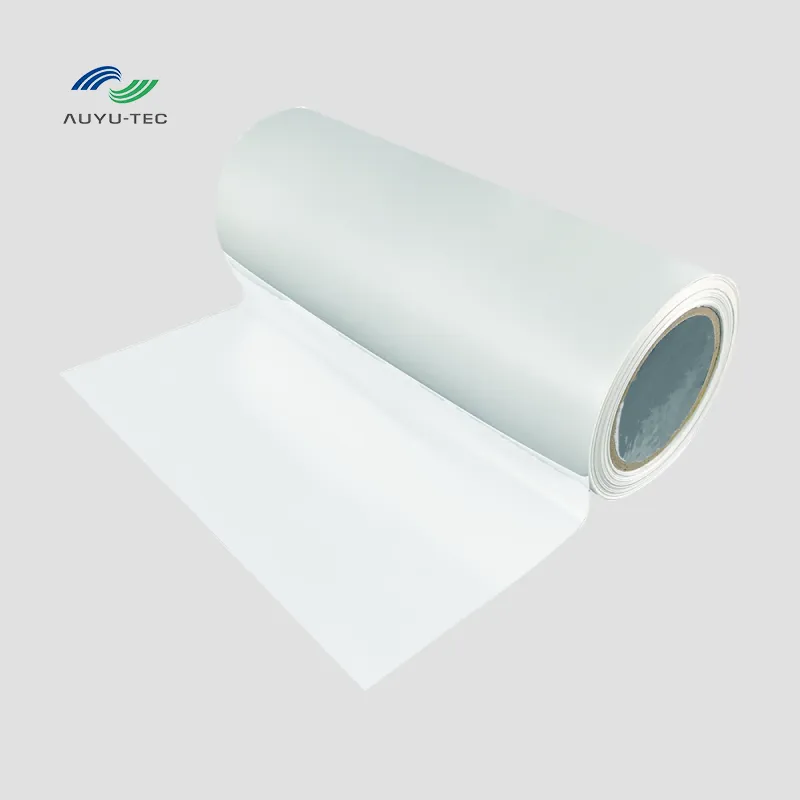

Introduction: Bonding films behave differently once the same adhesive layer meets moving fabric, shaped leather, or load-bearing luggage panels.
A product name alone does not tell a reader how an EVA adhesive film will behave in use. In textiles, the surface may be porous, knitted, coated, or elastic. In footwear, the bonded zone may flex near a toe bend or heel edge. In leather and luggage, the same film may face shape retention, edge stress, and visible surface change instead of simple softness. AOYU’s EVA hot melt adhesive film information is useful here because it shows textile-related, shoe, leather, and luggage directions alongside several material families and visual finishes, but that display still leaves the final fit to the exact substrate, SKU, and process conditions.
The real differences in bonding scenarios come from surface, flex path, and load, not the industry label
A textile laminate, a shoe upper, a leather trim, and a luggage panel can all be described as lamination jobs, yet the bond line is asked to do different work in each one. That is why the first question is not “Which industry is this? ” but “What kind of surface is being joined, how will the finished part move, and where will the stress concentrate? ” A knit fabric stretches with body motion; a woven fabric may resist stretch but still wrinkle and shear; a coated textile can block wetting or change how the film grabs the surface; leather may have natural variation in grain, finish, and porosity; and luggage panels often combine outer fabric, reinforcement, foam, and lining into a layered structure that spreads force across larger areas. AOYU’s film information shows examples such as nylon, Lycra/spandex, PVC, PU, mesh, and woven fabrics, which tells a reader that the discussion is not limited to one textile family. It also presents EVA, TPU, PO, PES, and PA families in the same product environment, which is a reminder that bonding film is a category, not a single behavior. The surface energy of the top layer, the open area of the substrate, and the thermal response of the film all influence whether the adhesive wets the interface cleanly or leaves weak spots. A smooth PU surface and an open mesh are not asking the film to perform the same way, even if both appear under the broad label of textile or footwear use.
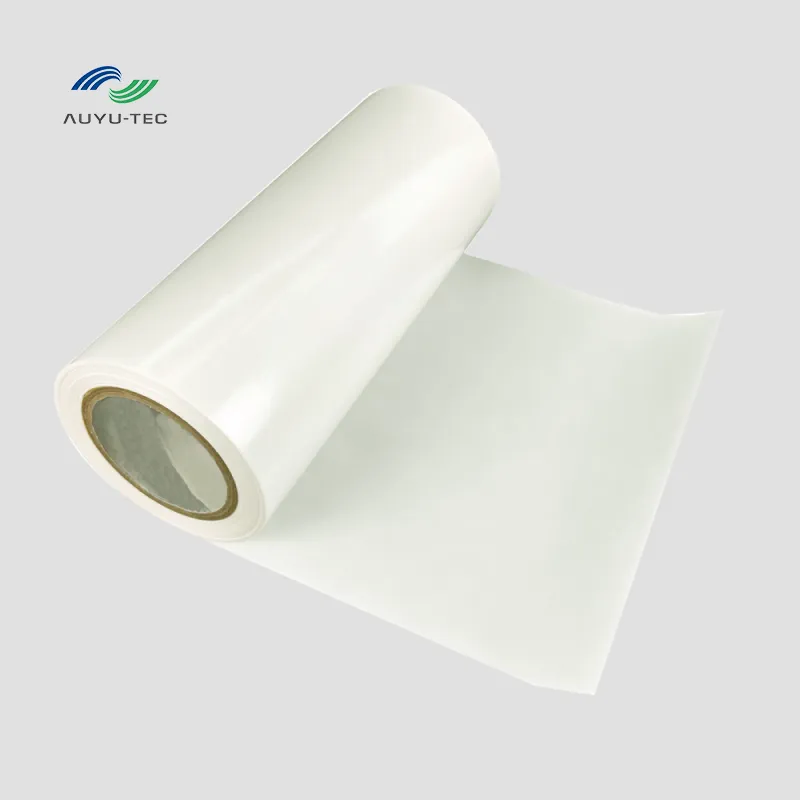
Different product uses care about flexibility, appearance retention, and durability in different ways
Flexibility is not one universal target. In one application, it means the bond must survive repeated bending without cracking. In another, it means the bonded part must keep its shape while the surrounding material moves. In a third, it means the surface must still look clean after stress, with no edge lifting, print-through, or visible glue line. That is why a film that seems soft enough at first glance may still be too stiff for one assembly and too weak for another. The visible appearance matters too. AOYU shows milk white, colorless and translucent, translucent, and translucent with light blue appearances. Those visual cues do not prove final aesthetics in a finished product, but they do matter because a light-colored fabric, a reflective laminate, or a leather-facing layer can reveal the adhesive layer if the film tone or translucency is not matched well enough.
1. Textile Laminations Must Account for Fabric Movement and Repeated Flexing
Textiles are rarely still. An underwear panel stretches with the body, a mesh layer may flex with every wear cycle, and a woven fabric may fold and recover many times. In that setting, the film has to tolerate movement at the interface, not just hold two surfaces together on a flat press bed. If the fabric is elastic, the bond line must keep pace with extension and recovery; if the fabric is open or textured, the film must bridge small voids without leaving dry patches; if the fabric is thin, the film may influence hand feel or surface appearance more than expected. This is where a reader should think beyond sticks or does not stick and ask whether the bond will remain even after the garment or panel is repeatedly flexed, rubbed, or shaped in real use. The common mistake is to read an application note as if it were a universal approval. A film shown for Lycra or mesh does not automatically mean every SKU in the family will behave the same way on every knit or woven base. Textile laminations often need a cleaner balance of softness and cohesion than stiffer assemblies, because the bonded layers move together rather than sitting in a fixed structure.
2. Footwear Leather and Luggage Structures Distribute Stress Differently
Footwear and luggage both use layered construction, but they do not distribute stress in the same way. Footwear concentrates repeated bending near the forefoot, the vamp, and the heel line. That means a bond can fail even if it survives the initial press, simply because the user’s gait keeps loading the same zone in the same direction. Leather footwear adds another layer of complexity because the upper may need to keep its shape while still moving with the foot. A luggage shell or soft bag panel, by contrast, is more likely to see panel tension, corner impact, handle pull, seam stress, and edge fatigue. The film may need greater resistance to creeping, edge lift, or layered separation rather than just high flexibility. This difference is why soft is not always the right answer. A shoe upper may need enough give to survive flex, but a luggage panel may need more body so that the outer layer does not distort, bubble, or telegraph the reinforcement beneath it. Leather and luggage also place more weight on surface appearance over time. A visible wrinkle, shine change, or line mark can matter as much as bond strength. For that reason, readers should treat footwear and luggage as two related but not identical stress maps, even when both use hot melt adhesive films.
How to turn page applications into testable material questions
The most useful way to read an application list is to convert it into questions about the substrate, the motion, and the failure mode. If a film is shown for nylon, Lycra/spandex, PU, PVC, mesh, woven fabric, leather, footwear, or luggage, the next step is not to assume readiness. The next step is to ask what kind of sample was intended, which surface finish was involved, and what happens after the first press is no longer the only event in the process. In industry practice, the visible bond line often changes before the assembly fully fails. Edges start to lift, the surface becomes glossy or cloudy, the laminate feels stiffer in one zone, or the layers separate along a hidden interface. Those are not academic details; they are the signs that the bond, the substrate, and the usage motion are out of balance. A useful mental chain is simple: material interface, processing window, use stress, then failure appearance. If the interface is smooth or coated, wetting may be the first challenge. If the film softens too early or too late, the press cycle may create a weak bond even though the temperature looked acceptable. If the finished part bends often, the relevant question becomes flex fatigue, not just initial peel. If the finished part sits in a load-bearing shape, the relevant question becomes dimensional stability and edge behavior. This is also where generic safety and testing frameworks help readers stay disciplined. OEKO-TEX® STANDARD 100 gives a broader textile chemical-safety context, while OEKO-TEX® LEATHER STANDARD serves as a similar reference point for leather-related materials. Intertek’s apparel testing resources are useful for understanding how textiles and laminated materials are commonly evaluated for durability, but none of those references can replace tests on the exact base material, film SKU, press settings, and final structure.
Conclusion
Bonding film selection in textiles, footwear, leather, and luggage is less about the industry name and more about how the finished part behaves after bonding. A moving knit panel, a flexing shoe upper, a shaped leather surface, and a load-bearing luggage layer all ask different things of the same adhesive layer. The product information from AOYU is helpful because it shows several material families, substrate examples, and film appearances, but those are starting points for judgment rather than final suitability claims. Readers who understand surface behavior, movement, and stress distribution will ask better questions, notice early failure signs sooner, and separate application display from real fit more accurately.
FAQ
Q:Which textile materials are shown as compatible with AOYU hot melt adhesive films?
A:The product information presents nylon, Lycra/spandex, PVC, PU, mesh, and woven fabrics as examples, along with textile-oriented uses such as underwear and home textiles. That should be read as a shown application direction, not as a guarantee that every film SKU fits every textile base.
Q:Why do footwear and luggage laminations require different flexibility considerations?
A:Footwear must survive repeated flex at bend zones, so the bond has to move with the upper without cracking or edge lift. Luggage is more about panel shape, corner stress, and layered load distribution, so the laminate often needs different body, surface stability, and resistance to distortion.
Q:Does an application list prove that every adhesive film SKU is suitable for that material?
A:No. An application list shows that the product family is presented for that direction, but each SKU still needs its own confirmation against the exact substrate, finish, press temperature, pressure, dwell time, and end-use stress. The same material name can behave very differently across different film constructions.