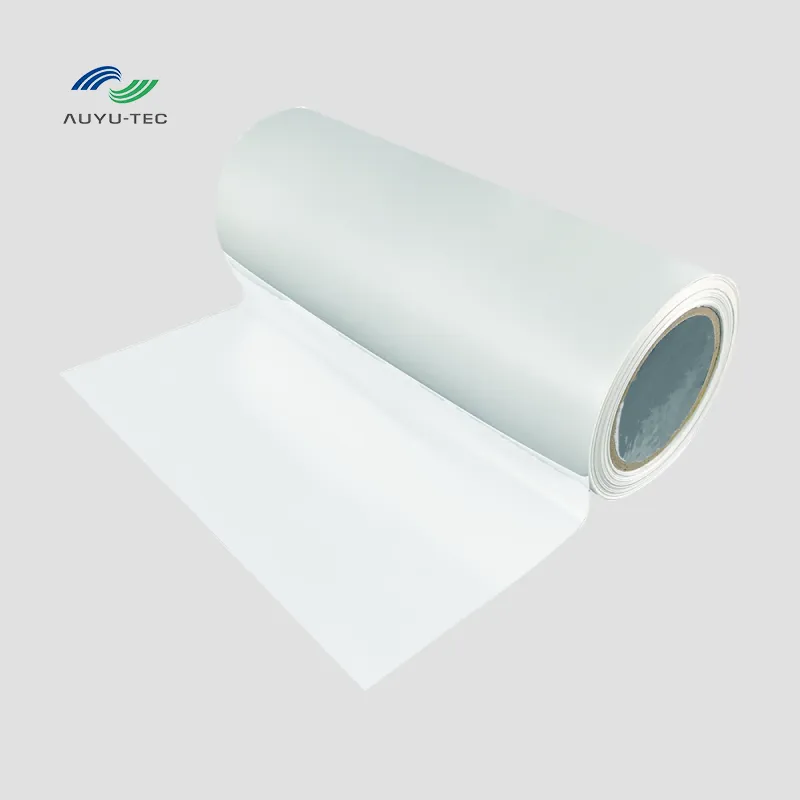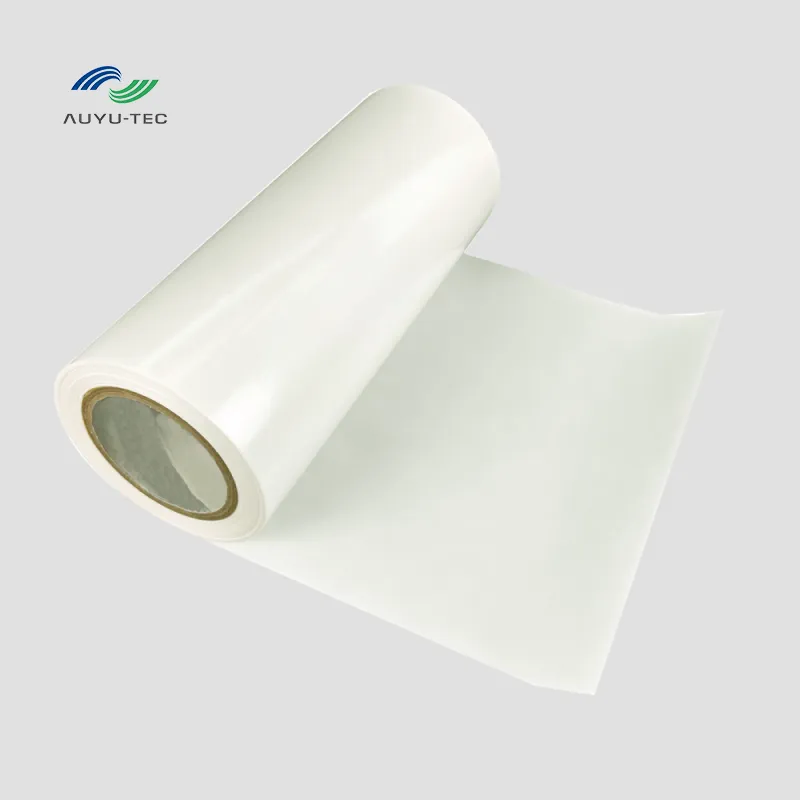

Introduction: Hot melt film, powder, and web adhesives share heat activation, but their physical forms change placement, heat distribution, and interface formation in composite manufacturing.
Confusion often starts with the broad term “hot melt adhesive. ” Products may share related chemistry while being supplied as a continuous sheet, separate particles, or an open fibrous network. These forms are not interchangeable descriptions. Film is positioned as a defined layer, powder is distributed across a target area, and web is placed as a porous adhesive structure. The most useful comparison therefore follows the chain from material form to processing action and then to composite structure. This approach helps distinguish product categories without assuming unconfirmed bond strength, cost, production speed, equipment compatibility, or application range.
Film, Powder, and Web Adhesives Are Different Material Forms
Hot melt film is a continuous adhesive layer with a defined surface area. Before heating, it already covers the intended bonding region as a connected sheet. It can be cut, aligned, and placed between prepared substrates without first creating coverage from individual particles. Depending on formulation and design, the film may appear transparent, translucent, or opaque, but continuity is its defining physical feature. Powder adhesive consists of discrete particles. Before activation, the particles form separate points or a distributed bed rather than a naturally continuous sheet. Coverage depends on how the particles are deposited, retained, spaced, and melted. A sparse distribution may leave larger spaces between adhesive locations, while a denser distribution may produce more connected coverage after heating. “Powder” therefore identifies a delivery form, not a specific polymer family or guaranteed bonding result. Web adhesive is a porous, fibrous, or mesh-like structure. It resembles a lightweight nonwoven network with open spaces between adhesive fibers. The network can cover a surface while retaining a different pre-activation structure from a solid film. During heating and pressure application, the fibers may soften, collapse, or form adhesive bridges across the interface. The exact structure depends on the product, so “web” should not be treated as a synonym for either film or powder. Physical form matters because it controls how adhesive is handled before melting. A sheet is judged first by alignment and area coverage. Particles are judged by distribution across the target zone. A web is judged by its network structure, placement, and ability to remain positioned during assembly. These observations explain category differences, but they do not establish that one form is universally better. Industry references and polymer materials literature commonly treat delivery form as a separate variable from chemical composition and final performance. A form label also does not identify the polymer automatically. EVA, TPU, PO, PES, PA, COPA, and COPES describe material families or chemistry-related categories, whereas film, powder, and web describe physical delivery forms. The same general material family may be supplied in more than one form, subject to the supplier’s product range and technical documentation.
Form Changes Heat Transfer and Composite Structure
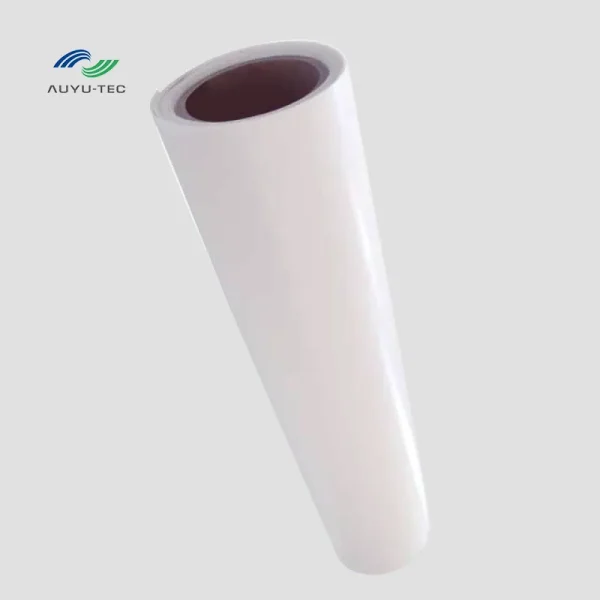
The processing difference becomes clearer when heat and pressure move through a multilayer assembly. A film presents a connected adhesive mass across the prepared bonding zone. Heat reaches a continuous layer, and pressure can bring that layer into broad contact with both substrates. This starting geometry may simplify the interpretation of gaps, overlaps, edges, and alignment in a flat composite. Powder begins with separated adhesive locations. Heat must soften or melt those particles before they can spread, connect, or create local contact. The interface is consequently affected by particle spacing, retention, surface texture, and the relationship between deposited material and the substrate. Web begins with a connected but open network. Heat and pressure act on fibers and voids, producing a different route to coverage from both solid film and isolated powder. These differences do not mean that every film heats uniformly or that every powder or web distributes heat in the same way. Substrate thickness, moisture, surface preparation, pressure distribution, thermal conductivity, formulation, and the complete heating cycle remain important. The useful principle is that adhesive geometry establishes the starting conditions for heat transfer and contact formation; it does not determine the finished result by itself.
1. Film Adhesives Create a Continuous Layer Across Prepared Surfaces
Film is typically cut, aligned, and placed as a sheet with a defined length and width. In a broad, flat interface, the intended adhesive area can be inspected before activation. Misalignment, uncovered edges, and overlaps are therefore directly connected to sheet geometry. Once softened, the film can conform to the prepared surfaces under pressure, but the final interface still depends on substrate compatibility, cleanliness, texture, and the processing cycle. The AOYU listing identifies “EVA Hot Melt Adhesive Film” and “Hot melt adhesive film” under “Web & Film Adhesives. ” That confirms the listed product as a film-form adhesive. The same visible material includes terms such as EVA, TPU, PO, PES, PA, DTF powder, and COPES. Those terms should not be combined into one assumed form, one formulation, or one confirmed SKU structure.
2. Powder and Web Forms Distribute Adhesive Through Different Paths
Powder reaches the interface through particle placement. Scattering, coating, printing, or another deposition method may be used, but the category remains defined by separate particles that must be positioned across the required area. The eventual contact pattern depends on the deposited amount, spacing, retention, melting behavior, and substrate surface. Web reaches the interface through a connected, open structure. Instead of isolated particles, the process positions a fibrous adhesive layer containing voids. Under heat and pressure, the network may soften or flow into contact points. Its pre-activation appearance and coverage path therefore differ from those of a solid film. The web form alone does not prove a particular air-permeability level, bond strength, processing speed, or equipment requirement. For initial identification, a roll or sheet suggests film, a deposited layer of discrete particles suggests powder, and a lightweight fibrous sheet or mesh suggests web. These clues support category recognition but are not substitutes for technical documentation when the product form or SKU relationship is unclear.
Understanding Terminology Through Composite Structure and Processing Actions
A reliable terminology boundary separates three questions: what the adhesive is made of, what physical form it takes, and how that form is processed. Chemistry addresses the first question. Film, powder, and web address the second. Placement, heating, pressure, and interface development address the third. These dimensions interact, but one cannot replace another. For example, “EVA adhesive” points toward a material family, while “hot melt film” points toward a delivery form. “EVA film” combines both descriptions. “Hot melt powder” identifies the form while leaving the chemistry unspecified unless another document supplies it. TPU may also appear in more than one processed form, but the word TPU alone does not establish whether a particular product is a film, powder, granule, or web. Composite structure provides a practical way to interpret these labels. A broad, flat interface makes continuous film coverage easy to recognize. A design requiring distributed adhesive locations raises questions about powder deposition and spacing. A porous or flexible layer may lead to examination of a web structure and its behavior during compression. These are selection questions, not proof of superiority. Final performance remains dependent on substrate pairing, surface condition, formulation, thermal cycle, pressure, and construction. The same discipline applies to product navigation. A supplier may group films, webs, powders, and granules under related hot melt adhesive categories because they serve a wider materials portfolio. That grouping does not prove that every visible term refers to the same product or that every form is available in every chemistry. In the AOYU listing, the identified product is an EVA Hot Melt Adhesive Film within Web & Film Adhesives. The appearance of “DTF powder” or “COPES powder” does not, by itself, confirm that the current film product contains adhesive powder or that a particular powder SKU belongs to the same listing. A precise description should state the physical form first and connect chemistry only where documentation does so. “Continuous hot melt film with the listed chemistry” is more informative than treating every hot melt product as interchangeable. Where the relationship remains unclear, the chemistry or SKU connection should be confirmed through the relevant technical document. This keeps material form, polymer family, and product availability separate while preserving the practical distinction among film, powder, and web adhesives.
Conclusion
Hot melt film, powder, and web adhesives differ first in physical form and processing logic. Film begins as a continuous sheet, powder as distributed particles, and web as an open fibrous network. These starting structures influence placement, heat transfer, and interface formation, but they do not independently establish chemistry, performance level, cost, production capacity, or application range. The AOYU listing identifies a hot melt adhesive film under Web & Film Adhesives, while its relationship to visible powder terms remains unconfirmed. For a specific composite, confirm the form, material family, substrate pairing, process conditions, and relevant technical documentation before moving to samples or production evaluation.
FAQ
Q:What is the main difference between hot melt film, powder, and web adhesives?
A:Hot melt film is a continuous sheet, powder adhesive consists of separate particles, and web adhesive is an open fibrous or mesh-like network. Film provides a connected starting layer, powder requires controlled particle distribution, and web provides a connected but porous structure. These physical differences affect handling and placement, but they do not by themselves identify the polymer chemistry or guarantee a particular bonding result.
Q:How does adhesive form affect placement and heat distribution in composite manufacturing?
A:Film starts with broad continuous coverage, powder places adhesive at separated particle locations, and web distributes adhesive through a connected open network. As heat and pressure are applied, each geometry follows a different path toward substrate contact. Substrate thickness, surface preparation, pressure distribution, formulation, and the heating cycle still determine how the final interface develops, so form alone cannot predict finished performance.
Q:Does the AOYU listing confirm that the listed powder terms are separate hot melt adhesive products?
A:References to DTF powder or COPES powder should therefore remain separate from the identified film product unless a technical document or individual product listing establishes that connection.
Sources / References
Adhesives and Sealants Play Crucial Role in Hydrogen-Based Fuel Cell Assembly
Polymers | An Open Access Journal from MDPI
Materials | An Open Access Journal from MDPI